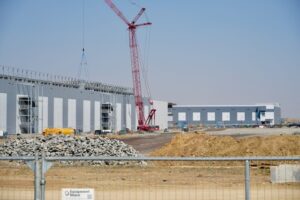
Proposal comes amid widespread community pushback against power-hungry facilities that support AI
This story was originally published by Capital & Main.
A Denver-area housing development under construction on a former 800-acre dryland farm touts its “incredible connection to nature.” Yet a Black-eyed-Susan covered vacant lot across the street could upend that connection: It’s slated to become the largest data center in Colorado.
Planning documents quietly filed with the city of Aurora show two two-story buildings on the property that would equal 861,866 square feet combined. The current design calls for 334 megawatts of planned IT capacity, with a total electrical demand to power computer banks, as well as lights and other appliances, of about 500 megawatts, said Mark Freeman, Vantage Data Center Inc.’s vice president of global marketing, in an email.
At full buildout, the energy consumed would equal about 11 times the power used by Denver International Airport, about eight miles to the north.
The 143-acre project proposal is little known to residents in Aurora, Colorado’s third-largest city. Its location in a half-built residential area in a census block disproportionately impacted by pollution highlights how the lack of rules for such developments largely leaves residents out of the planning process, an investigation by Capital & Main found.
Many cities and counties in the state currently allow staff to decide the fate of data center projects in areas zoned for commercial and industrial uses. Such proposals often aren’t required to go through a planning commission and city council process that includes public hearings.